


Kitchen Lighting
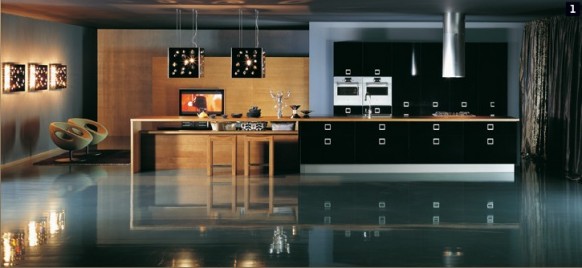
Whenever the talk is about decorating the kitchen, one of the aspects that most of the people tend to overlook comprises of the lighting. However, since a person, more specifically the woman of the house, spends quite a lot of his/her time in the kitchen, good lighting becomes one of the most important features of the overall decor. When it comes to kitchen lighting, it is vital to ensure that not only is it enough, but also that it is not too excessive. At the same time, it should go well with the architectural details and overall decoration theme of the kitchen. Let us explore some ideas on kitchen lighting.
Types Of Kitchen Lighting
Functional Lighting
Functional lighting, as the very name suggests, is used to get tasks accomplished in the kitchen. Apart from that, it is aimed at helping you find things in cabinets and drawers as well move around the room safely. Amongst the common kitchen functional lighting fixtures are fluorescents, recessed lights, and low voltage lighting. Of all the three, recessed lights can be used for task lighting purposes as well, especially over the sink and stove.
Decorative Lighting
Decorative lighting fixtures are, more often than not, meant for ornamental purpose, to impart a specific look to your kitchen or emphasize specific areas. For instance, you can use it to highlight the family eating area. In hardly a few cases can such lighting help you accomplish the kitchen tasks, say when it is used to highlight as well as provide light over an island. Wrought iron, colored glass, pewter and satin nickel lighting fixtures are in vogue these days.
Some Tips
* While deciding on the number as well as type of lighting fixtures in your kitchen, it is necessary to take the size of the room into consideration.
* The main work areas in the kitchen, such as the sink, stove, countertop, island and the areas over and below the cabinets, should be properly lit. Here, you can also make use of task lighting.
* Apart from the actual cooking, majority of the kitchen activities are undertaken at the table. So, it is necessary to light it up properly. You can use a pendant or chandelier fixture for the purpose, providing a dimmer switch alongside.
* While installing the lighting fixture, make sure that after turning on the light, no shadows are created on the areas where majority of the cooking tasks take place.
* Using dimmers for all the lights in your kitchen is a good idea, as you will be able to adjust the intensity of the light according to your mood.
* In case you are planning to use colored lights for your kitchen, try to stick to same color for all the kitchen lighting.Kitchen Remodeling
Planning, remodeling and designing a kitchen includes taking a few decisions that will help you to get a better deal where you can be comfortable while cooking in the future. Here are the things that you must decide beforehand:
* You may choose from fitted kitchens that occupy less space and have more storage space or a freestanding kitchen that can be moved easily and taken to any place with you.
* Lifestyle of the family - A single person that cooks rarely will prefer a minimalist's kitchen while a kitchen for a large family that is used quite often throughout the day needs a lot of storage space, groceries, cutlery and crockery and all the kitchen tools, equipments and appliances along with the sitting area for the family dinner gatherings.
* Seating area - A small kitchen may accommodate a small breakfast table while a big kitchen may have the dinner table set to cater to the whole family. You may also use a part of your dining/living room as the kitchen to make more space for the seating arrangement.
* Placing of refrigerator - Fridge should never be placed near the cooking hob as the appliances may not work properly. The ideal placement of refrigerator is between the entrance of the kitchen and the cooking area where all the members of the house can easily access it.
* Kitchen Shapes - Efficient kitchen is one that allows easy movement and enough space for sink; counter for food preparation, cutting and chopping; and cooking area. The most popular shapes are galley kitchens, two-way galley kitchens, L-shaped kitchens and U-shaped kitchens.
* Galley kitchens are the ones where all working areas are next to each other, have less storage space and require lot of movement.
* Two-way galley kitchens provides for storage space below the worktop, cupboards are placed on the opposite wall for easy access to minimize walking movements, is more compact and must have enough between the two galleys to avoid bumping.
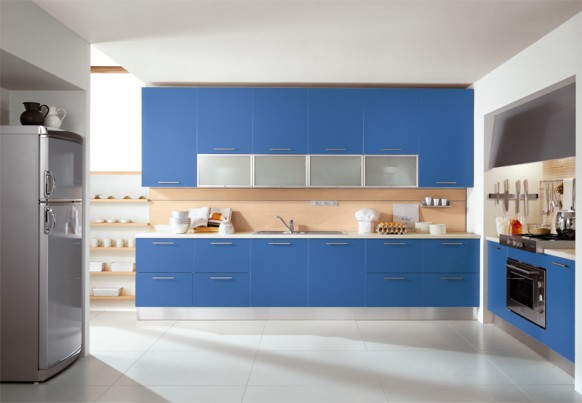
* L-shaped kitchens provide more workspace and storage area, walking distance is minimized and corners of the kitchen can serve as the dining area.
* U-shaped kitchens have the most workspace and storage area, has less floor area and are not for claustrophobics. In case, your kitchen seems too small, you may use one of the legs as a breakfast bar or provide for an island counter instead.
* Decide on the kitchen layout, starting with the placement of sink, preparation area and hob, the placement of fridge and the service points for water, electricity and gas.
Ventilation points and daylight should be kept in mind too. Kitchen Sinks
When it comes to kitchen decor, sink has a major role to play in accentuating the charm of your kitchen. On a daily basis, it witnesses a number of activities and undergoes plenty of pressures. Therefore, it becomes of utmost importance to ensure the practicality of the kitchen sink, in terms of its functioning. So, don't go just by the looks, but also mull over its functionality. Read on to know more about sinks for kitchen.
If kitchen sink design is a major concern for you, you don't need to worry at all, as the market provides you with a large number of appealing design options to choose from. Apart from fulfilling the utilitarian purpose, the kitchen sinks today serve as a great decoration. In the contemporary times, you can find a fabulous variety of kitchen sinks in the market, differing in their designing, finish and material.
The sinks of the modern times are intricately designed and not just contain a faucet and a bowl. Consisting of multiple bowls of varying sizes, they consist of cutting boards, instant hot water dispensers, drainers, sprayers, soap dispensers and many more. Even in terms of material, there is a great diversity available in the market like stainless steel, porcelain, enameled metal etc.
There are a number of factors that need to be borne in mind before making the final selection of the sink type you would like to go in for. The first and foremost thing that you need to pay attention to is the size of the sink, as in its width and depth. Once you are clear about the size, the next thing in priority is the material that is used in the making of kitchen sink.
Out of the various kitchen sink types, the more popular ones are those made from granite, copper and stainless steel. Assess your personal needs, check out the various kinds of kitchen sinks, analyze the pros and cons of each type and thereafter, make the final selection of the sink that you would like to go in for to adorn your kitchen.
Kitchen Tiles
Tiles form a very important part of the kitchen Decor, making or marring it completely. One of their best aspects is that they are available in small sizes, enabling you to create wonderful patterns. At the same time, the variety in colors, sizes and materials of kitchen tiles is almost endless. Apart from being used on the floors, tiles also form a part of the walls, backsplash and even countertops. Not only do kitchen tiles look extremely attractive, but are also stain as well as water resistant. The only flaw with them is that the grout needs to be cleaned regularly. At the same time, you need to replace them when they get chipped or cracked. Still, using tiles in kitchen is a good option.
Kitchen Tile Ideas
* While making using of tiles in your kitchen, don't make the mistake of going for coordinated colors, between work surface, walls, floor, and the like. Rather, make use of contrasting accent colors and create an impact.
* One of the main surfaces that you have to coordinate your kitchen tiles with comprises of the doors, and not the worktop. The kitchen tiles should be either of a lighter or darker shade, or a contrasting accent color.
* While selecting kitchen tiles, try to make use of different materials. An assortment of ceramic, stone, glass and metal tiles can impart an interesting look to your kitchen, which will be affordable as well.
* Using different tile textures can also work to the advantage of your kitchen. Matt, silk or gloss tiles; un-filled travertine, polished natural stone or porcelain tiles and glass tiles - all lend a different look.
* The color of kitchen tiles is also something that should be kept in consideration while selecting the tiles. For example, using dark colored tiles as flooring creates the impression of a larger space.
* While using tiles, do not forget to pay attention on grout color. Using contrasting color can add to the look of the kitchen, but also shows grouting or tiling mistakes easily. On the other hand, coordinating grout color creates a seamless effect.
Selecting the Right Tiles
* Backsplash is the area that catches most of the spills of day-to-day cooking, so make sure that the tiles you use for the same are easy to clean as well as maintain. At the same time, they should impart a bit of character to the kitchen.
* While selecting the floor tiles, remember that they will have to bear the maximum brunt, of spills, knocking of pots and pans, etc. So, they need to strong and tough. This is one of the main reasons why glass tiles don't work well in this case, except as accents.
* For floor tiles, glazed tiles will not work too well, since they tend to get very slippery with a little bit of water also. At the same time, kitchen floor tiles should not be too porous or they will absorb the stains and spills too quickly, making it difficult for you to clean them.
* Kitchen walls catch your eye very easily. So, make sure to give a lovable look to them. In this case, you can use feature tiles, borders and pattern designs to lend individuality.
* In case of the countertop, the tiles should be durable, heat resistant, non-porous and easy to clean as well. Since this is the place you will be working on, when in kitchen, make sure you like it well enough.
No comments:
Post a Comment